
Introduction: The Power of Backlinks for B2B SaaS Growth
In the saturated world of software, visibility is the primary currency for sustainable growth. Securing high-quality backlinks for B2B SaaS remains the most effective way to signal authority to search engines and outpace aggressive competitors.
This guide explores how strategic link-building transforms a product from an unknown startup into a recognized market leader. For founders and marketing managers, understanding this landscape is essential for long-term organic success.
The Unique SEO Challenges of B2B SaaS
SaaS marketing operates on a fundamentally different plane compared to B2C or traditional e-commerce. The technical nature of the products and the professional stakes involved create a high barrier to entry for search visibility.
Niche Audiences & Specific Keywords
B2B SaaS products often solve highly specific problems for narrow user personas. Ranking for these intent-driven keywords requires more than just optimized on-page content; it requires external validation.
Complex Sales Cycles & Longer Conversion Paths
Buyers rarely convert on their first visit to a SaaS website. Content must serve multiple touchpoints, requiring a backlink profile that supports information-heavy top-of-funnel assets and bottom-of-funnel comparison pages.
High Competition from Established Players
Entering a market often means competing with legacy giants who possess decades of domain authority. Disrupting these incumbents requires a sophisticated approach to building off-page signals that search engines cannot ignore.
Why Backlinks are Non-Negotiable for SaaS Authority
Backlinks serve as digital endorsements that validate your platform’s relevance and reliability. For B2B brands, they are the backbone of a sustainable organic growth engine that compounds over time.
Establishing Trust & Credibility with Search Engines
Google views SaaS backlinks from reputable industry sites as votes of confidence. A robust link profile proves your software is a trusted resource within its specific niche, which is critical for “Your Money or Your Life” (YMYL) topics.
Significantly Improving Search Rankings
While content quality is vital, links remain a primary ranking factor in Google’s algorithm. Quality backlinks accelerate the climb to page one for high-value transactional keywords that drive demos and trials.
Driving Qualified Referral Traffic
Beyond SEO, links from industry publications and review sites drive potential buyers directly to your site. This referral traffic often converts at a higher rate because the user arrives via a recommendation from a trusted third party.
What Defines a “High-Quality” Backlink for B2B SaaS?
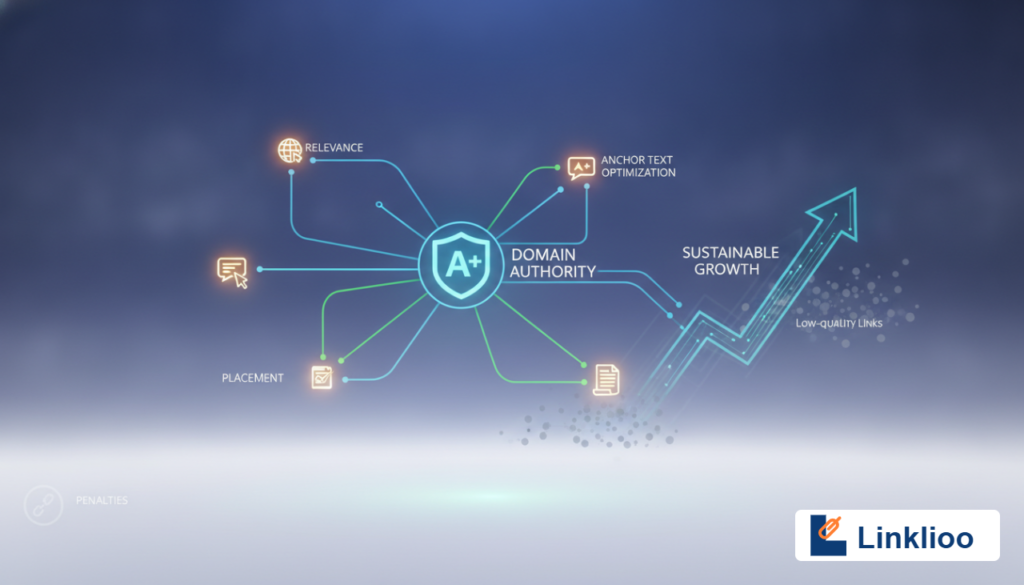
In B2B markets, the value of a link is determined by its ability to drive both rankings and qualified referral traffic. Effective B2B backlinks from an industry leader outweigh hundreds of low-tier directory submissions.
Key Characteristics of Valuable Backlinks
Relevance: Industry, Niche, and Context Search engines prioritize topical relevance. A link from a reputable DevOps publication carries significant weight for a cybersecurity SaaS, whereas a link from a generic lifestyle blog offers little value.
Domain Authority (DA) & Page Authority (PA) of Linking Site While not official Google metrics, DA and PA are vital indicators of a site’s strength. Aim for links from established domains with high trust scores and healthy organic traffic profiles.
Anchor Text Optimization: Natural and Keyword-Relevant The clickable text should provide context without appearing over-optimized. A mix of branded terms, specific keywords, and natural phrases ensures your profile remains safe from algorithmic penalties.
Placement: Contextual within Content vs. Footer/Sidebar Links embedded within the main body of a high-traffic article are significantly more powerful. Footer, sidebar, or “resource page” links often carry less weight and can appear spammy if overused.
Dofollow vs. Nofollow: Understanding Their Impact Dofollow links pass SEO “juice” directly to your site. While Nofollow links do not directly boost rankings, they are essential for a natural link profile and can still drive high-intent referral traffic.
The Difference Between Quantity and Quality: Why It Matters More for SaaS
Google’s Algorithm Updates (e.g., Penguin) and Penalties The Penguin update fundamentally changed how Google views link profiles. B2B SaaS companies that rely on automated or low-quality link schemes risk severe de-indexing or ranking suppression.
Long-Term SEO Impact and Sustainable Growth High-quality links act as a compounding asset. Unlike paid ads that stop working when the budget runs out, a strong backlink from an authoritative source provides sustainable organic growth for years.
Proven Strategies for Earning High-Quality Backlinks for B2B SaaS
Earning links in the B2B space requires a strategic shift from “building” to “earning.” You must provide genuine value to the internet to encourage high-authority sites to link to your platform.
Content-Centric Link Building: Creating Linkable Assets
Original Research & Data-Driven Reports B2B journalists and bloggers crave data. By publishing annual industry benchmarks or proprietary usage statistics, you create a primary source that others are compelled to cite in their own content.
Comprehensive Guides & Ultimate Resources Create the “Definitive Guide” for a specific workflow, such as SaaS onboarding or churn reduction. When your resource becomes the go-to manual for a topic, it naturally attracts educational and editorial links.
Unique Tools, Calculators, or Templates Free tools, such as ROI calculators or specialized spreadsheet templates, offer immediate utility. These assets are highly shareable and often get featured in “Best Tools” lists across the industry.
Thought Leadership Content: Whitepapers, eBooks, Case Studies Deep-dive content that solves complex business problems positions your brand as an expert. High-level decision-makers and industry analysts are more likely to reference original insights and success stories.
Infographics & Visual Content that Summarize Complex Data Visualizing complex SaaS metrics or industry trends makes your data more digestible. Other creators will often embed your graphics in their posts, providing a backlink as an attribution source.
Relationship-Driven Outreach & Digital PR
Strategic Guest Blogging on Authoritative Industry Sites Contribute expert articles to non-competing sites in your ecosystem. Focus on providing educational value rather than a sales pitch to secure a contextual link and build brand awareness.
Collaborations with Industry Influencers & Partners Partner with influencers or integration partners for webinars and co-authored studies. These relationships often result in high-authority links from partner domains and social media amplification.
Expert Roundups & Contributor Opportunities (e.g., HARO) Monitor platforms like Connectively (formerly HARO) to provide expert quotes to journalists. Being featured as a subject matter expert in major publications can earn you some of the strongest links possible.
Testimonials & Reviews for Complementary Tools/Services Reach out to the vendors of the tools your company uses. Offering a detailed, positive testimonial often results in a link from their “Customers” or “Testimonials” page.
Digital PR: Media Mentions, Press Releases, & Expert Commentary Use Digital PR to announce significant product milestones or funding rounds. When done correctly, this generates buzz and links from high-tier news outlets and industry-specific trade publications.
Technical & Strategic Link Acquisition
Broken Link Building: Finding Opportunities on Relevant Sites Identify dead links on authoritative industry blogs and suggest your relevant content as a replacement. This helps the site owner fix their user experience while earning you a high-value placement.
Competitor Backlink Analysis: Uncovering Their Sources Analyze where your competitors are getting their links. This often reveals guest posting opportunities, resource pages, or industry directories that you may have overlooked in your own strategy.
Reclaiming Unlinked Brand Mentions Use monitoring tools to find websites that mention your SaaS product but haven’t linked to it. A polite outreach email asking for the mention to be linked is one of the highest-conversion link-building tactics.
Internal Linking Optimization: Distributing Link Equity Effectively While not a backlink strategy, internal linking ensures that the “juice” from your high-quality external links is distributed to your most important product and conversion pages.
When to Consider a B2B SaaS Backlink Agency
Determining when to partner with a B2B SaaS backlink agency is a pivotal decision for growing software companies. As organic competition intensifies, relying solely on internal resources often leads to stagnation in search rankings.
Hiring a specialized agency provides the strategic depth needed to navigate the complex landscape of enterprise SEO. These firms bridge the gap between high-quality content production and the technical execution of authority building.
If your internal team is struggling to secure mentions on high-authority industry sites, it is time to look outward. A specialized partner ensures your link profile grows alongside your product’s market presence.
Advantages of Partnering with a Specialized Agency
Partnering with an agency that understands the SaaS lifecycle offers distinct advantages over generalist firms. These entities operate with a deep understanding of recurring revenue models and long-term customer acquisition costs.
Leveraging Expertise & Established Networks
Specialized agencies spend years building relationships with editors and webmasters at top-tier technology publications. This network allows them to bypass traditional gatekeepers that typically ignore cold outreach attempts.
By tapping into these established connections, your brand gains immediate access to high-authority domains. This expertise ensures that every link acquired contributes directly to your domain’s topical relevance and authority.
Scalability and Consistent Link Acquisition
Internal teams often find it difficult to maintain a steady cadence of link acquisition while managing other marketing priorities. Agencies provide the operational infrastructure to scale outreach efforts without sacrificing quality.
This consistency is vital for maintaining a positive velocity in search engine rankings. A dedicated partner ensures that your backlink profile grows predictably month over month, regardless of internal pivots.
Time & Resource Savings for Your Internal Team
Link building is one of the most time-intensive aspects of digital marketing, requiring constant research and follow-ups. Outsourcing this function allows your internal team to focus on product marketing and conversion rate optimization.
By removing the burden of manual outreach, you maximize the efficiency of your high-level strategists. The agency handles the heavy lifting of prospecting, vetting, and securing placements.
Access to Advanced Tools and Methodologies
Top-tier agencies invest heavily in premium SEO suites and proprietary data analysis tools. These resources allow for more sophisticated competitor gap analysis and link prospecting than standard internal setups.
They apply proven methodologies to identify the most impactful link opportunities for your specific niche. This data-driven approach minimizes waste and maximizes the ROI of your link-building budget.
How to Choose the Right B2B SaaS Backlink Agency
Selecting the right partner requires a rigorous vetting process to ensure their goals align with your business objectives. Not all agencies are created equal, and the wrong choice can lead to long-term SEO penalties.
Niche Specialization (SaaS, B2B Focus)
The agency must demonstrate a profound understanding of the B2B SaaS landscape and its unique audience. Generalist agencies often fail to grasp the technical nuances of software-related content and industry-specific pain points.
A specialized firm knows which publications carry weight with your target decision-makers. Their focus ensures that links are placed on sites that actually drive relevant referral traffic and authority.
Transparent Reporting & Ethical (White-Hat) Practices
Transparency is non-negotiable when it comes to off-page SEO and link acquisition strategies. A reputable agency will provide clear documentation of every link earned, including the site metrics and the placement context.
Ensure the agency adheres to white-hat practices that comply with search engine guidelines. Avoid any firm that utilizes private blog networks (PBNs) or automated link schemes, as these pose significant risks.
Case Studies & Client Testimonials
A proven track record is the most reliable indicator of future success in the SaaS sector. Request detailed case studies that highlight specific growth metrics and the strategies used to achieve them.
Client testimonials from other SaaS founders or marketing managers provide insight into the agency’s communication and reliability. Look for evidence of long-term partnerships rather than one-off projects.
Understanding Their Outreach Strategy and Process
Inquire about the specific methods the agency uses to secure links and the type of content they produce. The process should be highly personalized, focusing on adding value to the target publication rather than mass-emailing.
A high-quality strategy involves manual outreach and the creation of linkable assets that naturally attract citations. Understanding their workflow ensures your brand is represented professionally during every interaction.
Measuring Success and Avoiding Common Backlink Building Mistakes
Effective backlink building is not a “set it and forget it” task for B2B SaaS companies. It requires rigorous tracking to ensure your investment translates into measurable growth.
Without a data-driven approach, you risk wasting resources on links that do not move the needle. Monitoring the right KPIs allows you to refine your strategy over time.
Key Metrics to Track for Backlink Performance
Tracking performance ensures that your link profile remains healthy and competitive. Focus on these core metrics to evaluate your progress and justify your SEO spend.
Number of Referring Domains
The total number of unique websites linking to you is often more important than the total number of links. Search engines value a diverse and broad link profile.
Gaining ten links from ten different authoritative sites is significantly more valuable than gaining ten links from a single domain. This diversity signals broad industry trust.
Average Domain Rating/Authority
While not official Google metrics, tools like Ahrefs (DR) or Moz (DA) provide a proxy for a site’s strength. Aim for a high average across your profile.
A link from a high-authority site passes more “link juice” to your SaaS platform. Consistently targeting sites with higher ratings improves your own site’s perceived power.
Impact on Organic Traffic & Keyword Rankings
The ultimate goal of SEO is to increase visibility. Monitor how your target keywords react in the weeks following a successful link-building campaign.
If your rankings for high-intent B2B keywords improve, your strategy is working. Correlating link acquisition with traffic growth confirms the ROI of your efforts.
Referral Traffic from Backlinks
Beyond SEO, a good backlink should drive actual users to your site. This referral traffic is a sign of high-quality, relevant placement.
If users are clicking through from a partner site, it indicates that the content is reaching the right audience. This traffic often converts at a higher rate.
Common Backlink Building Pitfalls to Avoid
Even experienced marketing managers can fall into traps that hinder their SEO performance. Avoiding these mistakes is crucial for maintaining long-term website authority.
Focusing Solely on Quantity over Quality
In the world of B2B SaaS, a few high-quality links from industry leaders outweigh hundreds of low-quality links. Quality is the primary driver of authority.
Low-quality links can dilute your brand’s reputation and offer zero ranking benefit. Prioritize placements on reputable, well-trafficked websites that your audience trusts.
Engaging in Spammy or Black-Hat Tactics
Purchasing cheap link bundles or participating in automated link schemes can lead to severe manual penalties. These tactics are easily detected by modern algorithms.
Recovery from a Google penalty is expensive and time-consuming. It is always safer to build links through ethical, relationship-based outreach and content marketing.
Ignoring Niche Relevance of Linking Sites
A link from a high-authority site is less effective if it is completely irrelevant to your niche. Contextual relevance is a key ranking factor for search engines.
Ensure that the linking site shares a similar audience or industry focus. Relevance tells search engines exactly what your SaaS product is about and who it serves.
Neglecting Internal Linking Opportunities
Backlinks provide the most value when your internal link structure is optimized. Don’t let external authority hit a dead end on a single landing page.
Distribute that authority to other high-value pages through strategic internal links. This ensures your entire site benefits from every new backlink acquired.
Conclusion: Elevate Your B2B SaaS SEO with a Robust Backlink Strategy
Building a high-authority backlink profile is a marathon, not a sprint. It requires a balance of strategic outreach, content excellence, and constant measurement.
By focusing on quality and relevance, you can establish your SaaS brand as a leader in your space. Avoid shortcuts and prioritize long-term growth over quick, risky wins.
Now is the time to audit your current profile and implement an ethical link-building plan. Start reaching out to industry partners and watch your organic performance climb.





Add comment